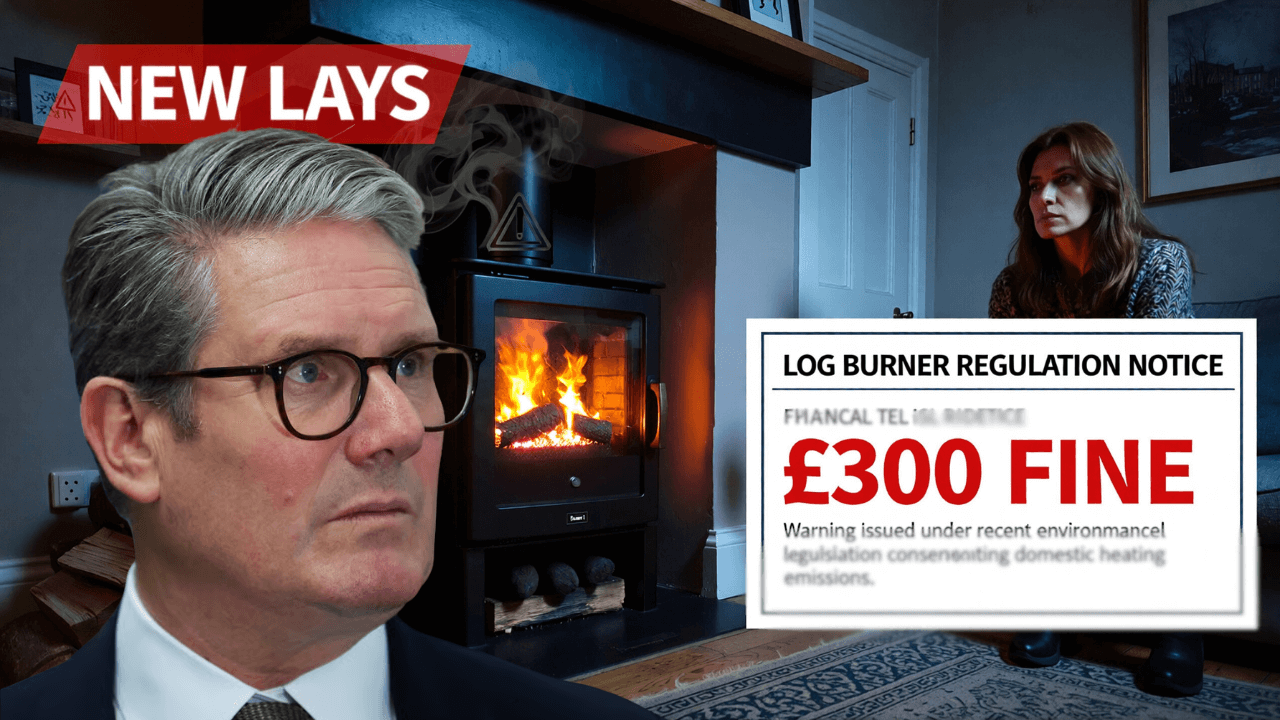
Wood‑burning stoves, commonly known as log burners, have become increasingly popular in homes across the United Kingdom. Many households enjoy the warmth, atmosphere and traditional feel these stoves bring, particularly during colder months. In rural areas and even in many towns and cities, log burners are often seen as both a practical heating option and a stylish feature in modern homes.
However, concerns about air quality and environmental pollution have led to new regulations surrounding how these stoves are used. As part of wider environmental policies aimed at improving air quality, authorities have introduced rules that place restrictions on certain types of fuels and appliances.
Recent discussions about fines of up to £300 for households using log burners have raised questions among homeowners about what the rules actually mean. Many people want to know whether their stove is still legal, what fuels they can burn and how the new rules may affect them.
Understanding the background behind these regulations and how they apply to households can help homeowners avoid penalties while continuing to heat their homes responsibly.
Why wood‑burning stoves have become so popular
In recent years, wood‑burning stoves have grown in popularity throughout the UK. Homeowners often install them as an alternative or supplement to central heating systems.
For some households, particularly in rural areas, wood burners can provide an efficient and cost‑effective way to heat living spaces. They also appeal to people looking for a more traditional or cosy atmosphere within their homes.
Interior designers have also embraced the aesthetic appeal of log burners. Modern stoves are often sleek, compact and designed to fit comfortably into contemporary homes.
Despite their popularity, wood burners have also become part of a wider environmental debate.
The environmental concerns behind log burners
Air quality has become a major concern in many parts of the UK, especially in urban areas where pollution levels can affect public health.
Burning solid fuels such as wood and coal releases tiny particles known as particulate matter into the air. These particles can contribute to air pollution and may affect respiratory health.
Because of these concerns, policymakers have introduced measures aimed at reducing emissions from domestic heating sources.
The government department responsible for environmental policy in the UK is the Department for Environment, Food & Rural Affairs.
This department works with local authorities to implement regulations designed to improve air quality and reduce pollution.
The introduction of cleaner burning rules
To address pollution concerns, the UK has introduced new standards for domestic stoves and fuels.
Modern wood‑burning stoves must meet strict environmental standards designed to reduce emissions. These appliances are sometimes referred to as “eco‑design” stoves because they comply with updated environmental requirements.
Older stoves that produce higher levels of emissions may not meet these standards.
The regulations aim to encourage households to upgrade older appliances or ensure that they use cleaner fuels.
What the £300 fine warning refers to
The £300 fine often mentioned in connection with log burner regulations relates to enforcement powers available to local authorities.
In certain circumstances, households may face penalties if they burn fuels that are not approved or if they use stoves in ways that violate local air quality regulations.
For example, burning unauthorised fuels or operating certain types of stoves in designated smoke control areas could lead to fines.
Local councils are responsible for enforcing these rules and may issue penalties if violations occur.
However, simply owning or using a log burner does not automatically lead to a fine.
Understanding smoke control areas
Many towns and cities across the UK are designated as smoke control areas.
These areas were introduced to help reduce air pollution by limiting the types of fuels that can be burned in domestic fireplaces and stoves.
Within smoke control areas, households are generally required to use approved fuels or authorised appliances that meet emission standards.
Burning ordinary house coal or wet wood in these areas may not be permitted.
Local authorities monitor compliance and may investigate complaints about excessive smoke from residential chimneys.
The role of local councils
Local councils play an important role in enforcing environmental regulations related to domestic heating.
They have the authority to investigate reports of smoke emissions that may breach air quality rules.
If a household is found to be repeatedly violating regulations, councils may issue warnings or fines depending on the severity of the situation.
In most cases, enforcement begins with advice and guidance to help households comply with the rules.
Penalties are usually considered only when regulations are ignored.
Approved fuels and cleaner alternatives
To reduce pollution, the UK government encourages the use of approved fuels designed to burn more cleanly.
These fuels produce fewer emissions and are often labelled as “ready to burn” or environmentally approved.
Using properly dried wood is also important. Wet or freshly cut wood can produce much more smoke and pollution than seasoned logs.
Many retailers now provide fuel products specifically designed to meet environmental standards.
Households using these approved fuels are far less likely to encounter regulatory issues.
Why older stoves may face scrutiny
Older wood‑burning stoves can sometimes produce significantly higher levels of emissions compared with modern designs.
As environmental standards have improved, newer stoves have been developed with better combustion technology that burns fuel more efficiently.
Some households with older appliances may choose to upgrade their stoves to newer models that meet eco‑design standards.
Although upgrading may involve an upfront cost, modern stoves often provide better efficiency and lower fuel consumption.
Tips for households using log burners
For homeowners who use wood‑burning stoves, a few simple steps can help ensure compliance with regulations.
Using properly seasoned or kiln‑dried wood helps reduce smoke emissions.
Regularly cleaning chimneys and maintaining stoves can improve performance and safety.
Checking whether a home is located in a smoke control area can also help households understand which fuels are permitted.
Following these practices not only helps avoid fines but also improves heating efficiency.
The broader effort to improve air quality
Log burner regulations are part of a wider national effort to improve air quality and reduce pollution.
Air pollution can have significant health impacts, particularly for people with respiratory conditions.
Reducing emissions from vehicles, industry and domestic heating sources is therefore a key priority for environmental policy.
The goal of these policies is not to eliminate traditional heating methods entirely but to ensure they are used in cleaner and more responsible ways.
Key things homeowners should remember
Log burners remain legal in the UK if they comply with environmental regulations
Smoke control areas restrict the fuels that can be burned
Using approved fuels helps reduce pollution and avoid fines
Local councils enforce air quality rules
Modern eco‑design stoves produce fewer emissions than older models
Final thoughts
The warning about potential £300 fines for households using log burners reflects the UK government’s broader efforts to tackle air pollution and promote cleaner heating practices. While the headlines may sound alarming, the reality is that most households can continue using their stoves legally by following simple guidelines.
Using approved fuels, maintaining stoves properly and understanding local regulations can help homeowners enjoy the warmth and comfort of a log burner without risking penalties. As environmental policies continue to evolve, staying informed about the latest rules will help households adapt while contributing to cleaner air for everyone.