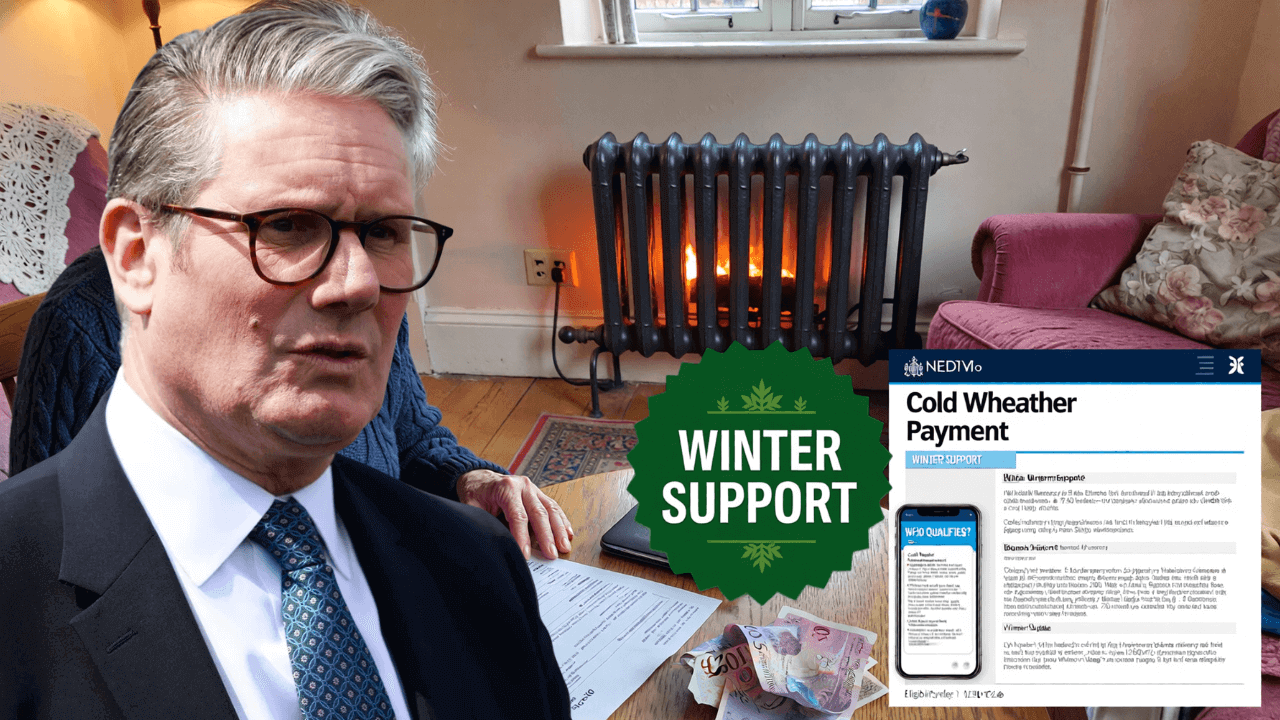
During the colder months in the United Kingdom, many households face higher heating costs. Keeping homes warm becomes essential not only for comfort but also for health, especially for older people, families with young children and individuals with long‑term health conditions.
To help vulnerable households manage heating costs during periods of severe cold, the government provides financial assistance through a scheme known as the Cold Weather Payment. This support is designed to provide extra help when temperatures fall to particularly low levels for several consecutive days.
The programme is managed by the Department for Work and Pensions, which oversees a range of welfare benefits and financial support programmes across the country.
Understanding how Cold Weather Payments work, who qualifies and how the payment is triggered can help households better prepare for winter expenses.
What the Cold Weather Payment is
The Cold Weather Payment is a government support scheme that provides additional money to certain benefit claimants during periods of extremely cold weather.
The purpose of the payment is to help cover the cost of heating when temperatures drop significantly.
Unlike some other benefits, Cold Weather Payments are not paid automatically every winter. Instead, they are triggered when the weather in a specific area meets certain temperature conditions.
If the average temperature in a local area is recorded or forecast to be zero degrees Celsius or below for seven consecutive days, a Cold Weather Payment may be issued to eligible households.
This system ensures that extra financial support is provided when it is most needed.
The amount of the Cold Weather Payment
The Cold Weather Payment is a fixed amount paid for each qualifying period of cold weather.
When a seven‑day period of extremely cold temperatures is recorded or forecast, eligible households receive a payment to help with heating costs.
The payment is usually made automatically to people who qualify, meaning there is no need to apply separately.
For households struggling with rising energy costs during winter, this additional support can provide valuable assistance.
Why cold weather support is important
Cold weather can have serious impacts on health and well‑being, particularly for people who are vulnerable.
Older individuals, people with chronic illnesses and families with young children are often more sensitive to low temperatures.
Maintaining a warm home environment helps reduce health risks such as respiratory illnesses and other cold‑related conditions.
By providing financial support during extreme weather, the Cold Weather Payment scheme helps ensure that households can keep their homes heated safely.
Benefits linked to Cold Weather Payments
Eligibility for Cold Weather Payments is usually connected to certain benefits.
People receiving income‑related benefits may qualify automatically when a cold weather period is triggered.
One of the most common benefits linked to this support is Universal Credit.
Claimants may qualify for Cold Weather Payments if their Universal Credit claim includes specific elements related to health conditions or responsibility for children.
Another group that may qualify includes people receiving Pension Credit.
Pension Credit supports pensioners whose income falls below a certain level, and recipients may automatically receive Cold Weather Payments when eligible.
How the payment is triggered
Cold Weather Payments are triggered based on temperature readings recorded by weather stations across the UK.
When the temperature in a specific area meets the criteria of zero degrees Celsius or below for seven consecutive days, the payment is activated.
The system relies on weather monitoring data to determine when payments should be issued.
Once the conditions are met, payments are automatically processed for eligible households in the affected postcode areas.
This automatic process helps ensure that support is delivered quickly during severe cold spells.
Automatic payments for eligible claimants
One of the key features of the Cold Weather Payment scheme is that eligible households usually receive payments automatically.
There is no need for claimants to submit an application or fill out additional forms.
The payment is sent directly into the same bank account where the individual normally receives their benefit payments.
This system simplifies the process and ensures that support reaches people without unnecessary delays.
Who is most likely to qualify
Although eligibility rules vary slightly depending on individual circumstances, several groups are more likely to qualify for Cold Weather Payments.
These include pensioners receiving Pension Credit and certain working‑age adults receiving Universal Credit with health‑related elements.
Households with young children or individuals with disabilities may also qualify depending on their benefit status.
Because the eligibility criteria are linked to existing benefits, the payment is targeted toward people who are already recognised as needing financial support.
The role of winter support schemes
Cold Weather Payments are just one part of a broader set of winter support programmes available in the UK.
These initiatives aim to ensure that vulnerable households can stay warm and safe during colder months.
Another well‑known programme is Winter Fuel Payment, which provides financial assistance to many pensioners to help with heating costs.
Together, these schemes form part of the government’s wider strategy to reduce the impact of winter energy costs.
Rising energy costs and household budgets
Energy prices have become an increasing concern for many households in recent years.
Higher heating costs can place additional pressure on families already managing tight budgets.
For benefit recipients and pensioners, extra support during cold periods can help reduce the financial burden associated with keeping homes warm.
Cold Weather Payments are designed to provide targeted help when weather conditions are at their most challenging.
Checking eligibility and payments
Claimants who believe they may qualify for Cold Weather Payments can usually check their eligibility through official government resources.
Because the payment is linked to weather conditions in specific postcode areas, eligibility can vary depending on where someone lives.
When a cold weather trigger occurs, eligible claimants typically receive payment within a short period of time.
Keeping personal details up to date with benefit authorities helps ensure that payments are processed without delays.
Why awareness of support matters
Many people who qualify for government support programmes may not always be aware of the assistance available.
Raising awareness about schemes such as Cold Weather Payments helps ensure that vulnerable households understand how support works.
Although payments are usually automatic, understanding the eligibility rules and conditions can help people feel more confident about how the system operates.
Clear information also helps households plan their winter finances more effectively.
Key points to remember
Cold Weather Payments provide financial help during periods of extremely cold weather
Payments are triggered when temperatures reach zero degrees Celsius or below for seven consecutive days
The programme is administered by the Department for Work and Pensions
Recipients of benefits such as Universal Credit and Pension Credit may qualify
Payments are usually made automatically when conditions are met
Final thoughts
Cold Weather Payments play an important role in helping vulnerable households manage heating costs during severe winter conditions. By providing additional financial support when temperatures drop significantly, the scheme helps ensure that people can keep their homes warm without facing unnecessary financial hardship.
For pensioners, families and individuals receiving benefits, understanding how Cold Weather Payments work can make winter planning easier. While the payments are triggered automatically when weather conditions meet the required criteria, awareness of the scheme ensures that households know what support may be available during the coldest months of the year.