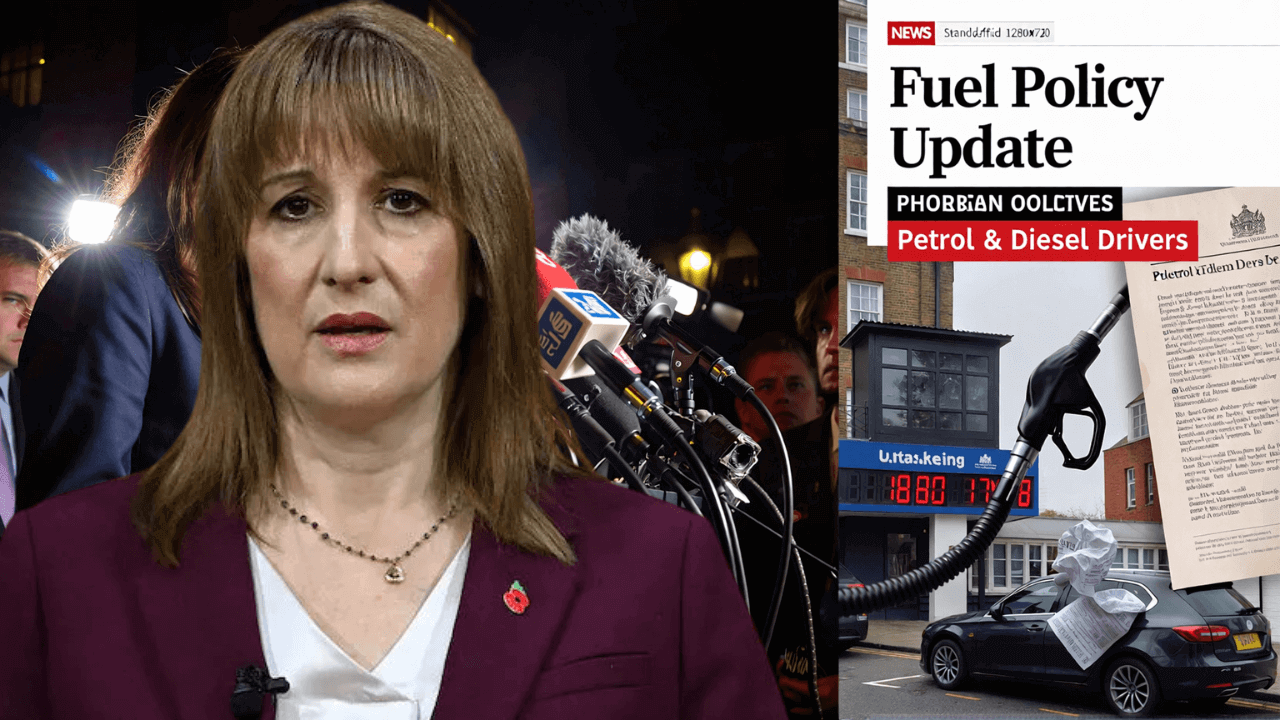
Fuel prices have long been one of the most closely watched issues for drivers across the United Kingdom. From daily commuters to delivery drivers and families planning long journeys, the cost of petrol and diesel directly affects household budgets and business expenses.
In recent months, attention has turned toward potential government action regarding fuel costs. Growing calls from motorists, industry groups and political commentators have placed increasing pressure on the government to consider measures that could ease the financial burden on drivers.
At the centre of the discussion is Rachel Reeves, who oversees the country’s economic and fiscal policy. As Chancellor, Reeves plays a central role in decisions related to taxes, spending and economic strategy.
With fuel costs continuing to influence the wider cost‑of‑living debate, many motorists are now watching closely to see whether any policy adjustments may be introduced that affect petrol and diesel drivers.
Why fuel prices matter to millions of drivers
Fuel costs affect a wide range of people in the UK. While some drivers use their vehicles occasionally, others rely on them daily for work, family commitments and essential travel.
For commuters who drive to work every day, even a small increase in fuel prices can significantly increase monthly expenses.
Businesses also feel the impact. Delivery companies, taxi drivers and tradespeople often depend on fuel to operate their services. When prices rise, operating costs increase, and these costs can sometimes be passed on to customers.
Because of this, fuel prices are closely linked to the broader cost of living across the country.
How fuel prices are determined
The price motorists pay at the pump is influenced by several factors.
One of the most important factors is the global price of crude oil. When international oil prices rise, fuel costs in many countries often increase as well.
Exchange rates also play a role, as oil is traded globally in US dollars. Changes in currency values can therefore affect the price paid by fuel suppliers in the UK.
Taxes represent another major component of fuel prices. A large portion of the cost of petrol and diesel includes fuel duty and value‑added tax.
These taxes are set by the government and therefore become a key part of political debates about fuel affordability.
The role of government in fuel pricing
While the government does not directly set the price at petrol stations, it influences fuel costs through taxation and economic policy.
Fuel duty is one of the largest taxes applied to petrol and diesel in the UK.
Changes to this duty can have a direct impact on how much drivers pay at the pump.
When governments reduce or freeze fuel duty, motorists may see some relief in fuel prices.
However, fuel duty also contributes significant revenue to public finances, which is used to fund services such as healthcare, education and infrastructure.
Because of this, decisions about fuel taxes often involve balancing support for drivers with broader economic considerations.
Calls for action from drivers and industry groups
Many motorists and industry organisations have recently called for government action to help manage fuel costs.
Some groups argue that reducing fuel duty could provide immediate relief for drivers facing rising living expenses.
Others have suggested that temporary measures could be introduced to support households and businesses during periods of high fuel prices.
Motoring organisations often highlight how fuel costs affect everyday life, particularly for people living in rural areas where public transport options may be limited.
These groups argue that maintaining affordable fuel prices helps support economic activity and mobility across the country.
The wider cost‑of‑living discussion
Fuel prices are part of a broader conversation about living costs in the UK.
Rising household expenses, including energy bills, food prices and transport costs, have placed pressure on many families.
Government policymakers frequently examine how different economic policies affect household budgets.
In this context, discussions about fuel prices are often linked to wider debates about economic support measures.
Because transport is essential for work and daily life, any policy related to fuel costs can have a wide impact.
Environmental considerations and fuel policy
Another important factor influencing fuel policy is the UK’s long‑term environmental strategy.
The government has committed to reducing carbon emissions and transitioning toward cleaner forms of transport.
Policies encouraging electric vehicles and alternative energy sources are part of this broader strategy.
While petrol and diesel vehicles remain widely used, policymakers must balance environmental goals with the immediate needs of drivers who depend on traditional vehicles.
This balancing act makes decisions about fuel taxes and support measures particularly complex.
The role of the Treasury in economic decisions
The department responsible for managing government finances is HM Treasury.
The Treasury oversees taxation policies, spending decisions and economic planning.
Any changes to fuel duty or related policies would typically be announced through budget statements or fiscal updates issued by the Treasury.
These announcements often attract significant attention because they influence financial planning for households and businesses alike.
Impact on businesses and transport industries
Fuel prices also affect many sectors of the economy beyond individual drivers.
Transport companies, logistics firms and delivery services rely heavily on petrol and diesel to operate their fleets.
Higher fuel costs can increase business expenses, which may eventually influence the price of goods and services.
This means that fuel prices can indirectly affect the cost of everyday items such as groceries and consumer goods.
For this reason, discussions about fuel policy often involve input from business groups as well as motorists.
How drivers respond to changing fuel prices
When fuel prices change, drivers often adjust their behaviour in response.
Some motorists look for ways to reduce fuel consumption by driving more efficiently or planning journeys more carefully.
Others consider switching to more fuel‑efficient vehicles or exploring alternative transport options where available.
In recent years, interest in electric vehicles has grown as part of the broader shift toward cleaner transportation.
However, petrol and diesel vehicles still make up the majority of cars on UK roads.
What drivers should watch in the coming months
Policy discussions around fuel costs often develop over time, particularly as governments review economic conditions and public spending priorities.
Drivers may see updates related to fuel taxes, transport policies or environmental strategies as part of future economic announcements.
Official government statements and budget announcements are usually the most reliable sources of information about any confirmed policy changes.
Monitoring these updates can help motorists stay informed about potential developments that may affect fuel costs.
Key points motorists should remember
Fuel prices are influenced by global oil markets, taxes and currency exchange rates
Fuel duty is one of the largest components of petrol and diesel prices
Government policy decisions can influence fuel affordability
Motoring groups often advocate for measures that support drivers
Environmental policies also play a role in shaping fuel strategies
Final thoughts
The debate surrounding petrol and diesel prices highlights the importance of fuel policy in everyday life across the United Kingdom. For millions of motorists, the cost of filling up a vehicle is not just a financial consideration but a factor that affects work, travel and daily routines.
As discussions continue about possible policy adjustments, attention remains focused on the role of government in balancing economic pressures with long‑term environmental goals. Whatever decisions emerge in the months ahead, fuel prices will likely remain one of the most closely watched issues for drivers throughout the country.