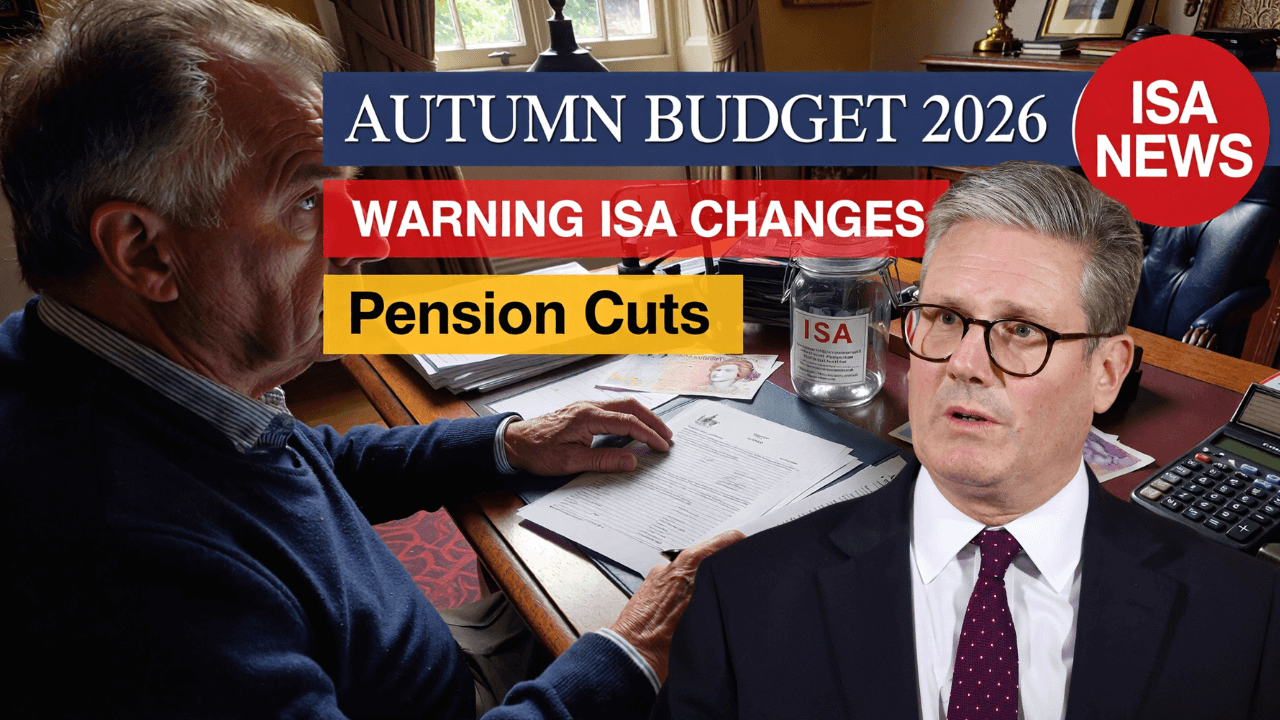
The Autumn Budget is always one of the most important events in the UK financial calendar. Every year, government decisions announced during the budget can influence taxes, pensions, savings rules and the overall financial outlook for millions of people across the country.
In 2026, discussions around the upcoming Autumn Budget have already begun months in advance. Savers, pensioners and financial experts are closely watching potential policy changes that could affect Individual Savings Accounts (ISAs) and retirement planning.
Reports and policy debates suggest that possible changes to tax‑efficient savings accounts and pension allowances could reshape the financial landscape for many households. While no official decisions are final until the government confirms them, the conversation around ISA reforms and pension adjustments has already generated significant attention.
Financial policy decisions in the UK are typically shaped by the government and implemented through institutions such as HM Treasury and the tax authority HM Revenue and Customs.
Understanding what the Autumn Budget might mean for savers can help individuals prepare and plan for possible changes.
Why the Autumn Budget matters for savers
The Autumn Budget outlines the government’s plans for taxes, spending and economic policy for the coming year. Because it covers such a wide range of financial decisions, it can affect everything from income tax rates to retirement savings incentives.
For savers and investors, the budget often includes updates related to tax‑free allowances, pension contributions and investment rules.
These decisions can influence how individuals structure their savings strategies, particularly when using tax‑efficient financial products.
Even small changes to allowances or tax thresholds can have a noticeable impact on long‑term financial planning.
Understanding Individual Savings Accounts
Individual Savings Accounts, commonly known as ISAs, are one of the most popular savings tools available in the UK.
They allow individuals to earn interest or investment returns without paying income tax or capital gains tax on those earnings.
Millions of people use ISAs to grow their savings while protecting their returns from taxation.
There are several different types of ISAs available, including cash ISAs, stocks and shares ISAs and lifetime ISAs.
Each type offers different benefits depending on whether someone prefers low‑risk savings or long‑term investment opportunities.
Because ISAs provide tax advantages, any potential changes to their rules often attract strong public interest.
Why ISA changes are being discussed
Policy discussions sometimes focus on whether tax‑efficient savings schemes remain sustainable or need adjustments.
Governments occasionally review savings incentives to balance encouraging investment with managing tax revenues.
Some analysts have suggested that future budgets may explore adjustments to ISA allowances or contribution rules.
These discussions do not necessarily mean that major changes will occur, but they highlight the government’s ongoing evaluation of financial policies.
For savers, understanding the possibility of policy adjustments can help them stay informed about how the financial landscape might evolve.
The role of pensions in retirement planning
Pensions form the foundation of retirement income for many people in the UK.
Workers contribute to pension schemes during their careers in order to build a financial cushion for retirement.
In addition to private and workplace pensions, many retirees rely on the State Pension.
The State Pension provides a regular income to individuals who have reached retirement age and have accumulated sufficient National Insurance contributions.
Because pensions play such a central role in financial security later in life, potential policy changes often receive close scrutiny.
Pension allowances and tax incentives
The UK pension system includes several tax incentives designed to encourage people to save for retirement.
For example, contributions to pension schemes often receive tax relief, which effectively boosts the value of the money invested.
There are also limits on how much can be contributed each year while receiving tax advantages.
These limits are known as pension allowances.
Governments occasionally review these allowances as part of broader tax policy decisions.
Changes to these limits could influence how individuals structure their retirement savings strategies.
Why pension reforms are debated
Pension policy must balance several priorities.
On one hand, governments want to encourage individuals to save for retirement so that they remain financially secure later in life.
On the other hand, tax incentives associated with pensions represent a significant cost to public finances.
Because of this, policymakers sometimes examine whether existing pension tax reliefs should be adjusted.
These discussions are often part of wider debates about how the tax system should support long‑term financial planning.
How savers may respond to policy discussions
Whenever potential policy changes are discussed, many savers review their financial strategies.
For example, individuals may consider maximising contributions to tax‑efficient savings accounts while current rules remain in place.
Others may seek advice from financial planners to ensure their retirement savings plans remain aligned with future goals.
Although speculation about budget changes can create uncertainty, many experts emphasise the importance of maintaining a long‑term perspective.
Financial planning is most effective when it focuses on long‑term goals rather than reacting to short‑term policy discussions.
The role of financial advice
Because savings and pension rules can be complex, many individuals seek professional guidance when planning their finances.
Financial advisers help people understand tax allowances, pension contribution limits and investment opportunities.
This guidance can be especially valuable when policy discussions suggest that changes might occur.
By staying informed and seeking expert advice when necessary, savers can ensure their financial plans remain effective regardless of policy updates.
The broader economic context
Budget decisions do not occur in isolation. They are influenced by broader economic conditions such as inflation, employment levels and government spending priorities.
When policymakers evaluate tax incentives or savings schemes, they often consider how these programmes affect the wider economy.
Encouraging long‑term savings can support financial stability, while changes to tax policy may influence consumer spending and investment behaviour.
Balancing these factors is one of the key challenges governments face when designing economic policy.
What savers should watch for in the coming months
As the Autumn Budget approaches, several areas may receive attention from policymakers and financial analysts.
These could include updates to tax allowances, pension contribution rules or savings incentives.
While it is impossible to predict exactly which changes might occur, staying informed about policy discussions can help individuals prepare for potential adjustments.
Monitoring official announcements from government departments and financial authorities can provide the most reliable information.
Key points UK savers should remember
The Autumn Budget outlines the government’s financial and tax policies
ISAs allow savings and investments to grow tax‑free
Pensions provide a foundation for retirement income
Tax allowances and incentives may be reviewed periodically
Staying informed helps savers prepare for potential policy changes
Final thoughts
The Autumn Budget is one of the most influential financial announcements of the year in the United Kingdom. For savers and retirees, potential discussions around ISA rules and pension policies highlight the importance of staying informed about government decisions that may affect personal finances.
While many policy discussions remain speculative until confirmed by official announcements, understanding how savings and pension systems work can help individuals plan with greater confidence. By keeping an eye on policy updates and maintaining a long‑term approach to financial planning, UK savers can continue building financial security for the future regardless of how budget decisions evolve.