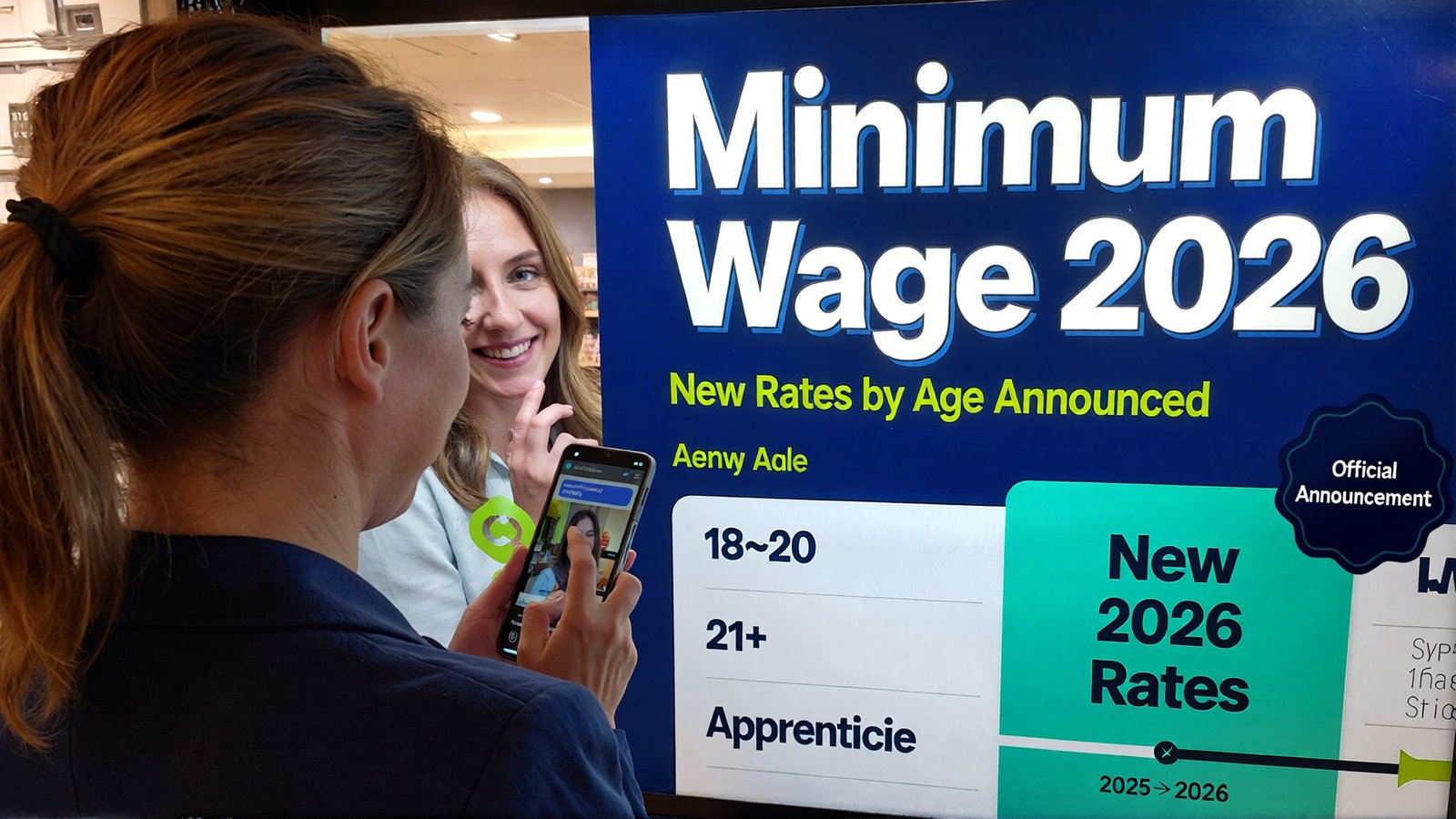
The UK Government has confirmed new National Minimum Wage and National Living Wage rates for 2026, bringing changes that will directly affect millions of workers across the country. Whether you are employed full‑time, working part‑time, completing an apprenticeship or managing a business, these updated figures are important.
For employees, the increase could mean a noticeable boost in take‑home pay. For employers, it means adjusting payroll systems and budgets to remain compliant with the law.
Here’s a clear and practical guide to what is changing, how the new rates work, and what it means for workers of different age groups.
What Is the UK Minimum Wage
The UK operates a tiered wage system known as the National Minimum Wage (NMW) and the National Living Wage (NLW).
These rates are legally enforced and apply to most workers. Employers must pay at least the statutory minimum depending on the worker’s age and employment status.
The system is overseen by the Government, with enforcement handled through tax and compliance systems administered by HM Revenue and Customs.
Failing to pay the correct rate can result in penalties and repayment orders.
The 2026 Minimum Wage Rates Explained
The confirmed 2026 rates introduce increases across all age bands.
The UK minimum wage structure is divided into:
National Living Wage (for workers aged 21 and over)
18–20 Year Old Rate
16–17 Year Old Rate
Apprentice Rate
Each band has its own hourly minimum.
The National Living Wage remains the highest band and applies to adults aged 21 and above.
Younger workers receive age‑specific minimum rates designed to reflect experience and training status.
National Living Wage for 21 and Over
Workers aged 21 and over are entitled to the National Living Wage.
This is the main adult minimum wage and applies regardless of whether the worker is full‑time or part‑time.
For someone working 37.5 hours per week, even a small hourly increase can translate into hundreds of pounds extra per year.
The 2026 adjustment continues the policy of gradually raising the minimum wage to reflect living costs and earnings growth.
18–20 Year Old Rate
Workers aged 18 to 20 receive a slightly lower statutory minimum compared to those aged 21 and above.
However, the 2026 increase narrows the gap between age bands in many cases.
For young adults balancing work and study, these changes can provide additional financial support during early career stages.
Employers must update pay rates as soon as a worker moves into a new age category.
16–17 Year Old Rate
Young workers aged 16 and 17 are entitled to their own statutory minimum rate.
This typically applies to school leavers, part‑time workers and those beginning entry‑level roles.
While the rate is lower than adult levels, it is still legally protected and must be paid in full for all hours worked.
The 2026 rise ensures younger workers also benefit from annual adjustments.
Apprentice Rate
Apprentices have a separate minimum wage band.
The apprentice rate usually applies to:
Apprentices under 19
Apprentices aged 19 or over in the first year of their apprenticeship
After the first year, apprentices aged 19 or older must receive the appropriate age‑related minimum wage instead.
This distinction is important for payroll accuracy.
Why Minimum Wage Rates Change Each Year
Minimum wage levels are reviewed annually to keep pace with economic conditions.
The Government considers recommendations from the Low Pay Commission before confirming new rates.
Key factors influencing decisions include:
Inflation
Average earnings growth
Labour market conditions
Business sustainability
The aim is to balance fair pay with economic stability.
How the Increase Affects Take‑Home Pay
The headline hourly rate does not always reflect final take‑home pay.
Income tax and National Insurance contributions may apply depending on total earnings.
If earnings exceed the personal allowance threshold set by HM Revenue and Customs, deductions will apply.
However, for many lower‑paid workers, a higher hourly rate means a direct increase in net pay.
What Counts as Working Time
Minimum wage calculations must include:
Time spent working
Mandatory training
Travel time between job sites (in many cases)
Overtime hours
Unpaid overtime that reduces average hourly pay below the legal minimum can breach the law.
Employers must calculate total hours accurately to ensure compliance.
Who Is Covered by Minimum Wage Law
Most workers are entitled to the minimum wage, including:
Full‑time employees
Part‑time employees
Casual workers
Agency workers
Zero‑hour contract workers
Some exceptions apply, such as the genuinely self‑employed.
If you are unsure about your status, checking your employment contract is important.
What Happens If You Are Underpaid
If you believe you are not being paid the correct minimum wage:
Check your payslip carefully
Calculate your effective hourly rate
Raise the issue with your employer
Contact official enforcement channels if necessary
HMRC has the authority to investigate complaints and require repayment of underpaid wages.
Employers can face fines and public naming for non‑compliance.
Impact on Businesses
For employers, minimum wage increases mean higher payroll costs.
Businesses may respond by:
Reviewing pricing structures
Adjusting staffing models
Improving productivity
Reassessing overtime practices
While some employers express concerns about cost pressures, others argue that higher wages improve retention and morale.
Regional Differences
Minimum wage rates apply across England, Scotland, Wales and Northern Ireland.
Although the cost of living varies regionally, the statutory minimum is nationally set.
Some employers in higher‑cost areas may choose to pay above the legal minimum.
Relationship With the National Living Wage
The National Living Wage is simply the highest statutory minimum band.
It should not be confused with voluntary living wage schemes run by independent organisations.
Only the Government‑mandated rate is legally enforceable.
The term “living wage” can sometimes cause confusion, but the official rate applies to workers aged 21 and over.
How This Affects Young Workers Moving Age Bands
When a worker moves from one age band to another, their minimum wage entitlement increases automatically.
For example, when turning 21, a worker becomes entitled to the National Living Wage.
Employers must update pay from the next pay reference period after the birthday.
Failure to do so may result in underpayment.
Broader Economic Context
Minimum wage increases often reflect a wider economic strategy.
Higher wages can:
Boost consumer spending
Reduce reliance on in‑work benefits
Support household income
However, they can also increase operating costs for businesses.
The 2026 changes reflect ongoing efforts to strike a balance between supporting workers and maintaining economic competitiveness.
Common Misunderstandings
There are several misconceptions around minimum wage.
The rate applies per hour, not per week.
Tips do not count toward minimum wage unless processed through payroll.
Salary contracts must still meet minimum hourly thresholds when broken down.
Age determines the rate, not job role.
Understanding these details helps avoid confusion.
What Workers Should Do Now
If you are currently on or near the minimum wage:
Check your hourly rate against the new 2026 figure
Review your next payslip after implementation
Ensure your age band is correctly applied
Raise any discrepancies promptly
Small payroll errors can sometimes occur during rate transitions.
What Employers Should Do
Employers should:
Update payroll systems
Inform staff of changes
Review employment contracts
Confirm compliance with age thresholds
Planning ahead prevents last‑minute errors.
Key Points to Remember
New 2026 minimum wage rates apply by age band.
The National Living Wage covers workers aged 21 and over.
Apprentices have specific rules.
Employers must comply or face penalties.
Workers should review their payslips carefully.
Final Thoughts
The announcement of new UK minimum wage rates for 2026 marks another step in the ongoing effort to raise pay standards across the country. For many workers, particularly those in retail, hospitality and entry‑level roles, the increase will provide welcome financial relief.
While businesses must adapt to higher wage bills, the long‑term aim remains clear: ensuring fair pay for work done.
If you are affected by the changes, taking a few minutes to review your rate and understand your entitlement can provide peace of mind. Clear information and timely checks are the best way to make sure you receive exactly what the law guarantees.